There is value in what already exists – The sustainability of a property is largely built on practical decisions: what is retained from an existing building, how energy consumption is reduced, what materials are used in a development project, and how well the property serves its users in the years and decades to come.
At Aare Invest, these questions are at the core of sustainable property development and long-term ownership. Our aim is to keep our properties competitive and usable for as long as possible, and to identify potential in the existing building stock that can be developed for new uses.
A new use can be a better option than demolition
A building’s current use does not necessarily reveal its full potential. In Aare Invest’s development projects, we examine whether the life cycle of an existing building can be extended through, for example, renovation, a change of use or a reorganisation of its spaces.
This also has a direct link to resource use. Making use of existing buildings saves the materials and energy already embodied in them. At the same time, energy efficiency can be improved and spaces adapted to the needs of today’s users.
Several current projects in our portfolio put this thinking into practice. At the historic Frenckell property, Väinö Paunu’s former bus depot and the Myllypuro renovation project, the starting point is to identify the potential of the existing building stock and develop it for a new life cycle.
At Frenckell, history meets today’s requirements
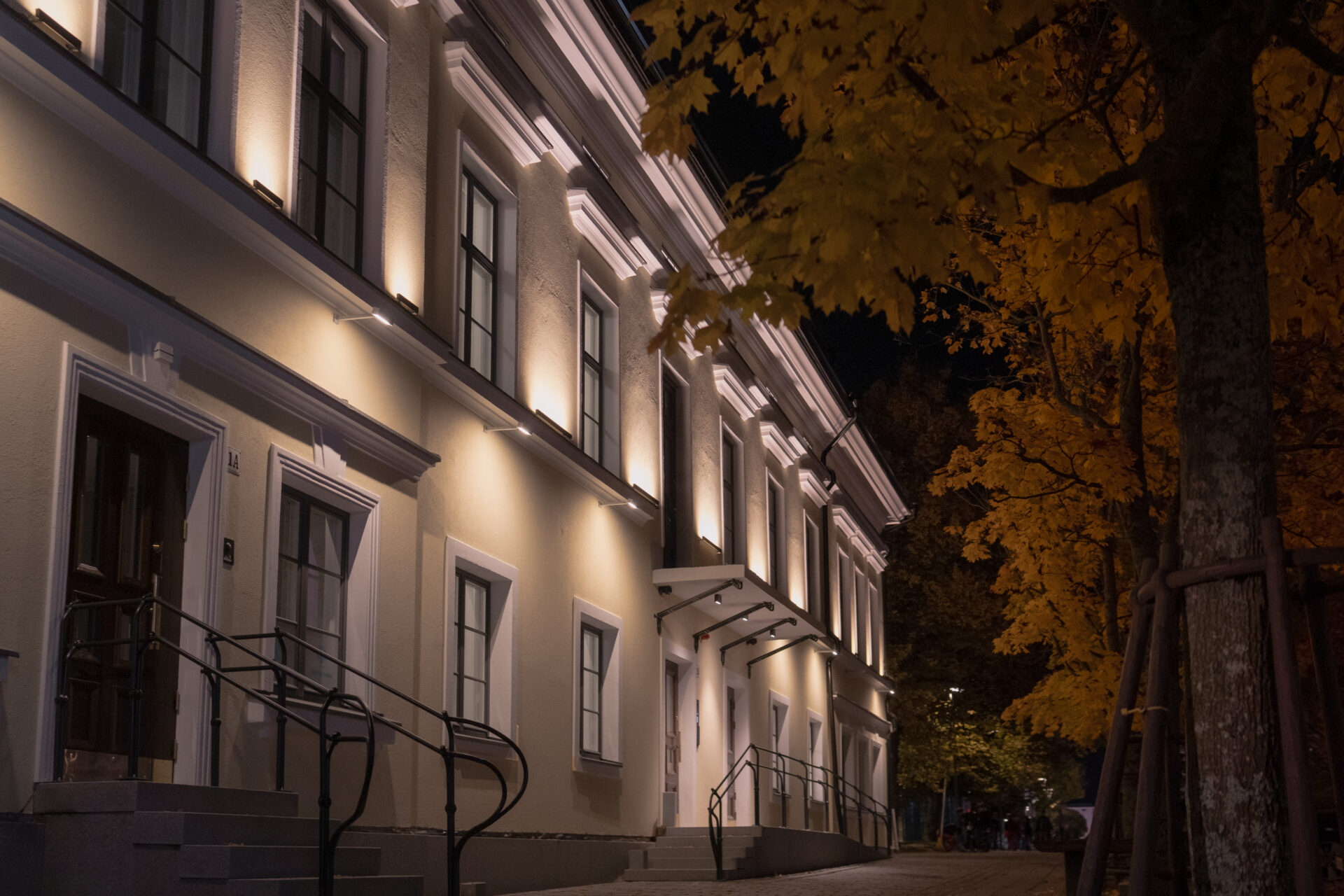
Located in the centre of Tampere, Frenckell is a good example of what developing older building stock means in practice.
The oldest parts of the Frenckell office building date back to the 1840s. In 2025, the property achieved a BREEAM In-Use Excellent environmental rating with a score of 73.7%. The development work has improved the building’s energy efficiency and resource efficiency, among other things, while preserving the distinctive features of the historic property.
The project illustrates Aare’s approach to property well: an old building is not in itself an obstacle to development. What matters more is understanding what can be done with the building and which measures will enable it to meet the requirements of the years ahead.
Energy efficiency also shows in the property’s finances
In addition to its environmental impact, improving energy efficiency has practical effects on how a property performs. Lower energy consumption can reduce operating costs, and good technical condition supports the property’s lettability and occupancy rate.
Aare also views energy efficiency and low-carbon solutions as part of managing property-related risks. As the requirements for buildings change, technical solutions and well-timed investments help prepare for changes in regulation and climate, for example.
At the end of 2025, 75% of Aare Invest’s properties by value were in energy class A, and 65% of the portfolio was certified. The value of the company’s investment properties was EUR 174.4 million, with approximately 119,300 m² of lettable area.
Targeting net zero by 2040
Aare Invest is advancing its sustainability work through a sustainability programme for 2024–2026. The programme sets out indicators, responsibilities and practical measures for its sustainability targets.
The company aims to reach net zero by 2040. In practice, this means improving energy efficiency, increasing the use of low-carbon solutions, and developing the monitoring and reporting of ESG data, among other measures.
The work is done one property at a time. Some measures relate to energy and building technology, some to the use of buildings, and some to how properties are maintained and developed together with their users.
Aare Invest CEO Marko Kuusisto sums up the approach in the 2025 Sustainability Review:
“We don’t approach development through demolition, but by identifying existing potential and developing it over the long term.”
This thinking is at the heart of Aare’s sustainable property development, especially in its redevelopment projects. When a viable next use is found for an existing building, it is possible to preserve the built environment, improve the property’s performance and extend its economic life cycle.
Read Aare Invest’s Sustainability Review 2025 → HERE